You can buy the best purifier on the market and still get mediocre results by putting it in the wrong place. Airflow is everything: a purifier needs to draw room air in, push it through the filter, and release it back into circulation. Block that cycle and the unit just churns the same pocket of air.
The good news is that placement is free. This guide covers the rule, the room-by-room setup, and the mistakes that quietly halve performance.
- The rule: 12 to 18 inches of clearance on all sides, and never in a corner or against a wall.
- Bedroom: 3 to 6 feet from the bed, not right beside your head.
- Living room: central, or between the seating area and the source of the problem.
- Kitchen: near the cooking area, but not so close it pulls grease into the filter.
- Never: behind furniture, in a closed cabinet, or directly against a wall.
On this page
The one rule that matters
A purifier is a circulation device. It pulls air in from the sides or back, filters it, and blows it out the top or front. If the intake is blocked, the unit starves. If the exhaust is blocked, the clean air does not reach the room. Either way, performance drops.
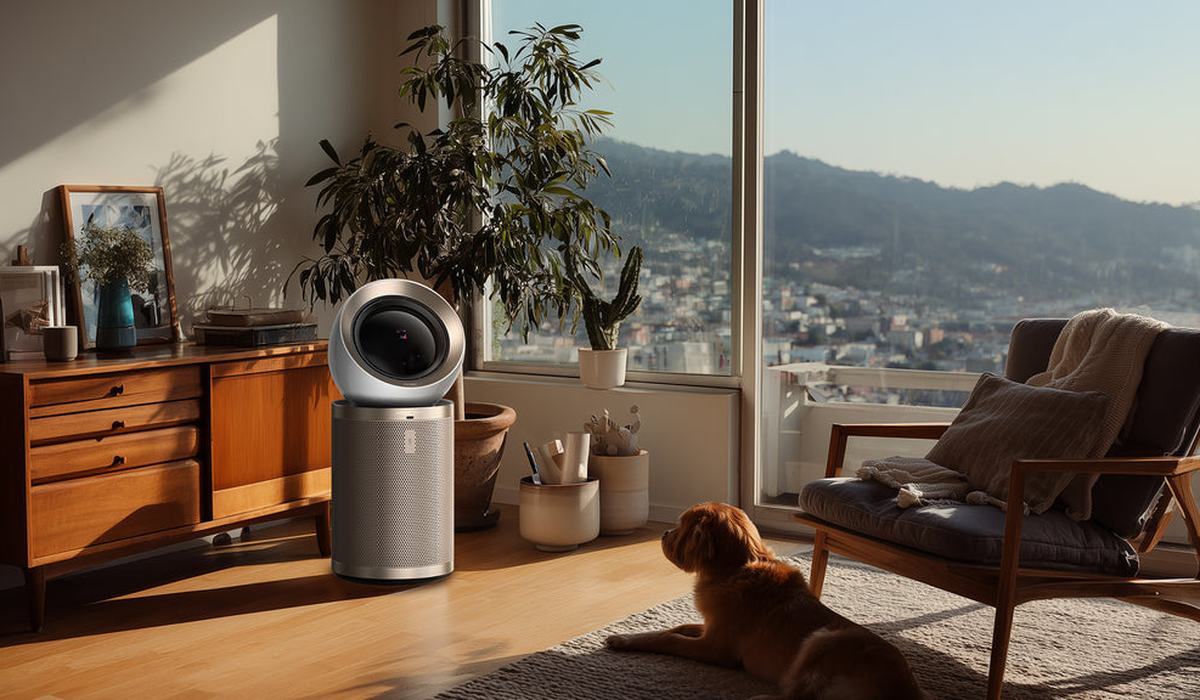
So the rule is simple: give it 12 to 18 inches of clearance on every side, and keep it out of corners. A corner traps air and forces the purifier to recirculate its own exhaust, which is the least efficient possible setup.
| Placement | Effectiveness | Why |
|---|---|---|
| Centre of the room | Best | Free circulation in all directions |
| Against a wall, 18in clearance | Good | Slight dead zone behind the unit |
| In a corner | Poor | Trapped air, exhaust recirculation |
| Behind furniture | Very poor | Blocked intake |
| In a closed cabinet | Useless | No airflow at all |
Room-by-room placement
Studio apartment
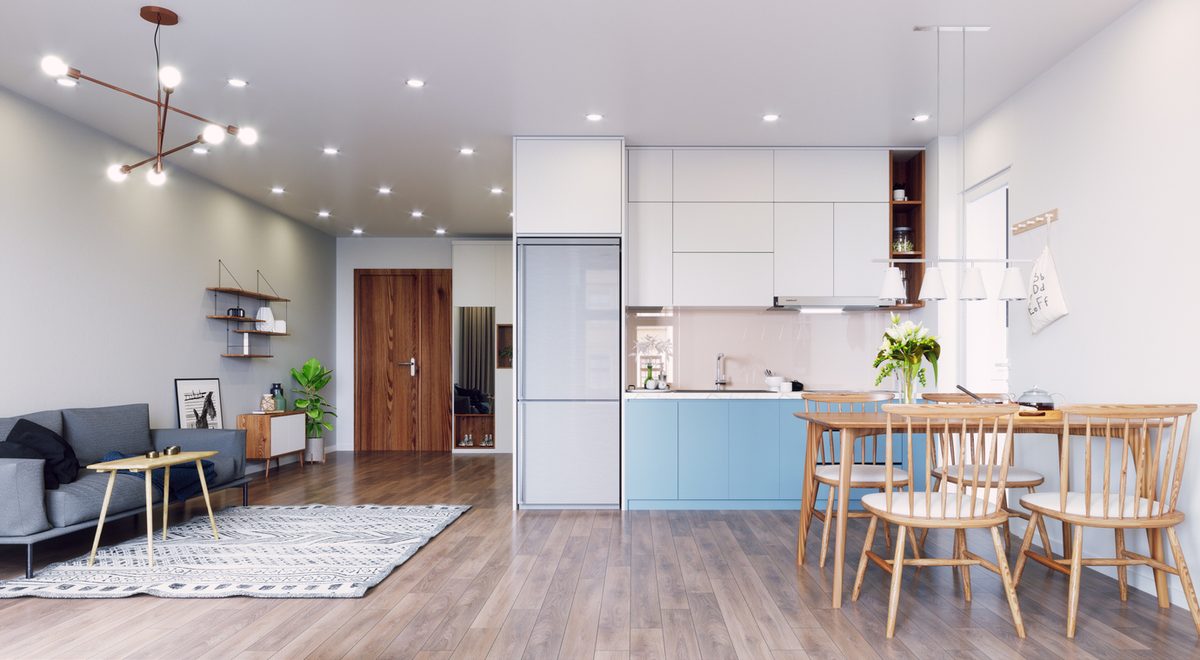
In a studio, one purifier has to cover everything. Put it centrally — ideally on a low table in the middle of the main living space — and run it on medium. If you cook in the same room, position it so the airflow carries cooking odour toward the unit rather than into the sleeping area.
Bedroom
Place it 3 to 6 feet from the bed, not on the nightstand beside your head. You want the clean air to reach you, but you do not want the fan noise in your ear or the exhaust blowing directly on your face. A spot near the foot of the bed, angled toward the room, works well.
Living room
Central placement is best. If you have a pet, put the purifier between the pet's favourite spot and the seating area, so it captures dander before it reaches you. If you have a fireplace or a street-facing window, place it on the side the pollution comes from.
Kitchen
A purifier helps with cooking smoke and odour, but keep it at least 3 feet from the stove so grease does not clog the pre-filter. Run the range hood first — it is far more effective at source capture — and let the purifier handle what escapes.
Mistakes that halve performance
- Pushing it into a corner. The most common mistake. Corners trap air and force exhaust recirculation.
- Blocking the intake with furniture. A sofa or curtain against the intake starves the fan.
- Putting it behind a door. A purifier in a closed room only cleans that room — which is fine if that is the room you want clean, but useless otherwise.
- Placing it in the path of an AC vent. The AC's airflow can fight the purifier's circulation pattern.
- Setting it on thick carpet. Carpet can block a bottom intake. Use a low table or a hard floor.
- Moving it constantly. A purifier needs hours to clean a room. Pick a spot and leave it.
Working with your apartment's airflow
Apartments have their own airflow: HVAC vents, doorways, and the stack effect in taller buildings all move air around. You can use this to your advantage. Place the purifier so its exhaust points toward the area you want clean, and let the room's natural circulation carry the clean air further.
If your building has a shared HVAC system, you cannot control what comes through the vents, but you can place a purifier near the vent to catch particles as they enter. In a sealed apartment with no central air, the purifier is the only circulation device, so central placement matters even more.
Give your purifier 12 to 18 inches of clearance, keep it out of corners, and place it centrally or between you and the pollution source. In a bedroom, 3 to 6 feet from the bed. Placement is free and it matters as much as the model you choose.
Frequently asked questions
Air purifiers
A true HEPA purifier sized for your room cleans the air fastest.