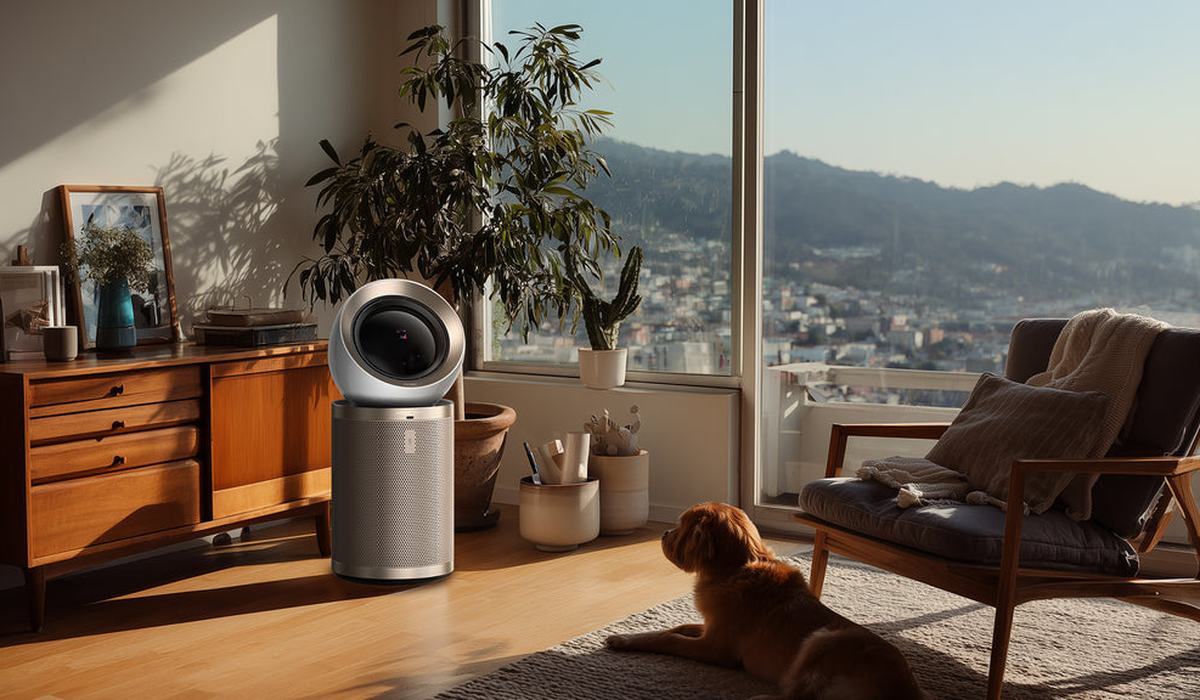
Every air purifier manual gives a filter-change interval. Almost every one of those intervals is optimised for a warranty, not for your apartment. If you cook a lot, have a pet, or live somewhere with wildfire smoke seasons, your filter is spent long before the calendar says so.
This page gives you a real schedule, the signals that override it, and the arithmetic of running a filter past its life so you can see why it matters.
- True HEPA: replace every 6–12 months in a typical apartment; 4–6 months with pets or heavy cooking.
- Activated carbon: replace every 3–6 months — carbon saturates long before it looks dirty.
- Pre-filter (washable): rinse monthly, replace every 6–12 months or when the mesh warps.
- Overriding rule: if airflow has visibly dropped or the unit smells musty, change it now regardless of the calendar.
On this page
Why the manual’s interval is wrong for you
Filter life is not measured in months. It is measured in grams of captured particulate and hours of runtime. Two apartments with the same purifier can differ by a factor of three:
- Runtime. Running 24/7 uses roughly three times the filter life of running 8 hours a day.
- Loading. A home with a shedding dog loads a HEPA filter several times faster than a pet-free studio.
- Cooking. Frying aerosol is fine and greasy; it blinds HEPA media faster than ordinary dust.
- Ambient air. If you are near a highway or in a region with wildfire smoke, PM2.5 loading is higher for months at a time.
- Carbon chemistry. Carbon adsorbs odour molecules until its pores are full, then it stops. It looks identical the whole time.
So treat the manual as a ceiling, not a target. If you run the unit constantly and cook daily, halve it.
The real schedule by filter type
| Filter type | Typical interval | Replace sooner if… | Can you wash it? |
|---|---|---|---|
| Pre-filter / pre-screen | Rinse monthly, replace 6–12 months | Mesh warps, tears, or stays discoloured after rinsing | Yes — rinse and dry fully |
| True HEPA (H13) | 6–12 months | Pets, smoking, heavy frying, wildfire season | No — never wash HEPA media |
| Activated carbon | 3–6 months | Odours return, cooking smells linger | Only if the unit specifies a washable carbon honeycomb |
| Composite HEPA + carbon cartridge | 4–9 months | Whichever layer fails first decides | No |
HEPA media is a mat of fine fibres held in a precise structure. Water collapses the structure and the residual moisture grows mould. Manufacturers that print “washable HEPA” on a unit are usually describing a pre-filter, not the HEPA layer. Vacuum a HEPA filter gently with a brush attachment if you must, but do not rinse it.
Three signs it is already spent
Do not rely on a change-filter light alone. Plenty of cheap units either have no sensor or use a crude timer. Three physical signs mean replace now:
- Airflow has dropped. Hold your hand over the outlet. If the stream is visibly weaker than when new, the media is loaded. This is the most reliable signal there is.
- It smells slightly musty or sour when you switch it on. That is a loaded carbon layer and, sometimes, microbial growth on damp media.
- Your monitor no longer responds. Turn the purifier on high in a closed room and watch PM2.5. If it barely falls compared to a fresh filter, the filter is done.
There is also a visual test, but only for pre-filters. Grey is normal. Black, matted, or furry means it has been overdue for a while.
What a clogged filter actually costs you
People delay replacing filters because a filter costs $25–$50. Here is the arithmetic that usually changes their mind.
- Higher electricity. A loaded filter forces the fan to work against higher resistance. Measured power draw rises and the unit runs on a higher speed constantly.
- Less clean air, not more. You paid for a device that removes particles. Running it with a spent filter is paying to move dirty air in a circle.
- Fan wear. Sustained back-pressure shortens motor life. A $30 filter is cheaper than a replacement unit.
- Odour failure. Once carbon is saturated, cooking smells and VOCs pass straight through.
A practical way to frame it: a $35 filter every 8 months is about $4.40 a month, which is less than the extra electricity a struggling fan consumes when the filter is clogged.
How to make filters last longer
- Vacuum the pre-filter monthly. Most of the coarse dust never reaches the HEPA layer if you catch it at the pre-filter.
- Run auto mode instead of high. A purifier that ramps down when the air is clean uses far less filter life than one left pinned on maximum.
- Reduce the source. Fifteen minutes of exhaust fan during cooking removes particles before the purifier has to capture them.
- Keep the unit off the floor and away from the wall. Better intake airflow means less work per unit of clean air.
- Do not run it during renovation dust. If tradespeople are working next door, cover the unit. Construction dust destroys filters in days.
- Buy genuine filters. Unbranded cartridges often use thinner media and leak around the gasket, so the unit bypasses its own filter.
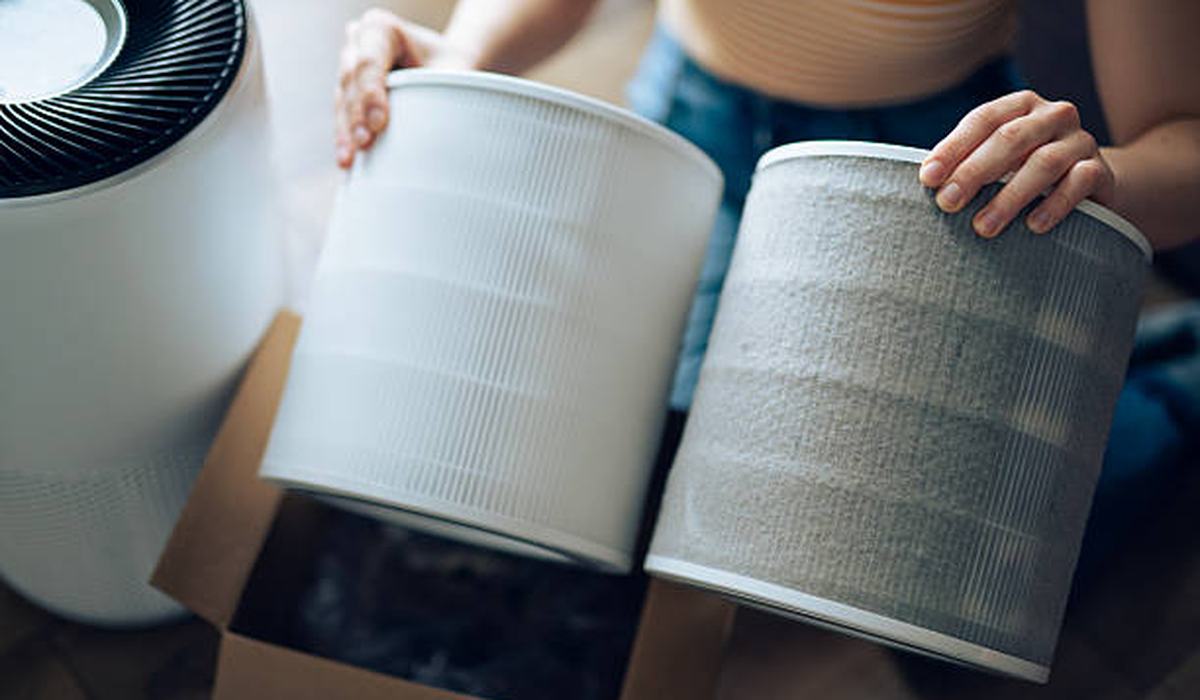
Levoit Core 300 replacement filter — the one we stock up on
Genuine cartridges fit properly and do not leak around the gasket. Under $25 each, and the 6–8 month life makes the running cost about the price of a coffee a month.
Check Price on Amazon →
Coway AP-1512HH filter set — best for odour-heavy homes
If cooking smells are your main complaint, the thicker carbon block in the Coway set lasts noticeably longer than thin carbon sheets on budget cartridges.
Check Price on Amazon →Plan on HEPA every 6–12 months, carbon every 3–6, and pre-filter rinses monthly. Then let three physical signs override the calendar: weak airflow, a musty smell, and a monitor that stops responding. Never wash a HEPA filter.