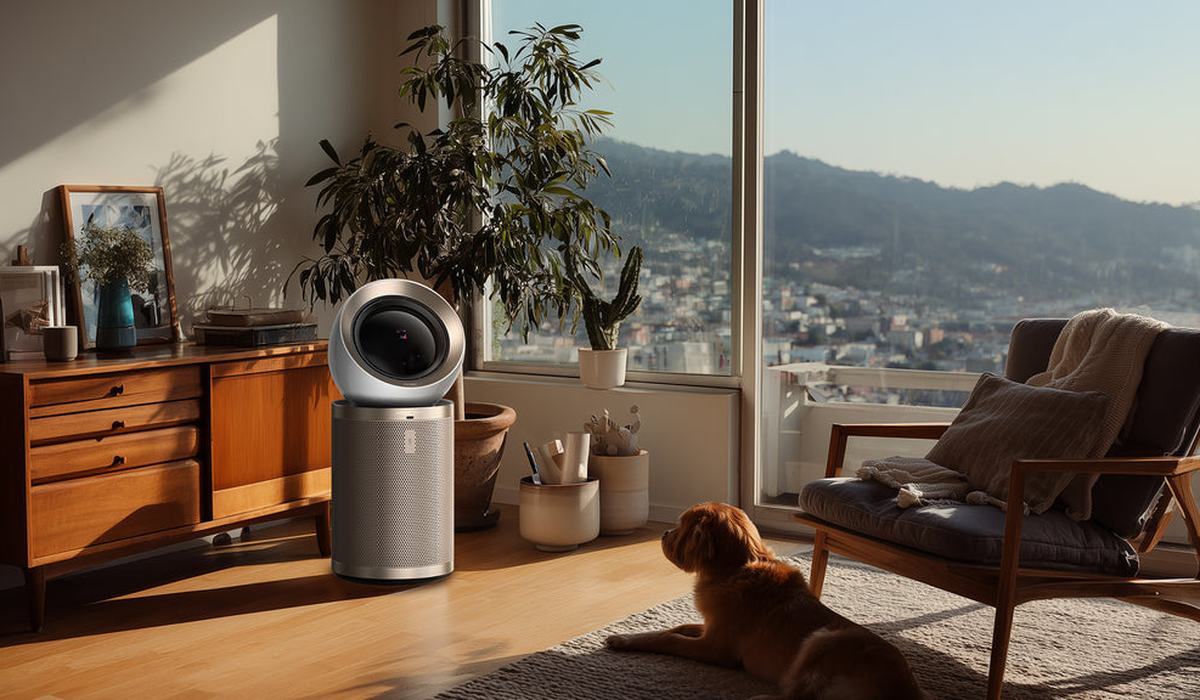
Almost every air purifier advertises “HEPA and carbon filtration” as if it were one thing. It is two mechanisms with opposite behaviours: HEPA catches solid particles mechanically, while carbon adsorbs gas molecules chemically. They fail in different ways, age at different rates, and cost different amounts to replace.
Understanding the difference explains a lot of confusing experiences — like a purifier that clears the smoke haze but leaves the smell, or one that smells fine but leaves you sneezing.
- HEPA removes particles: dust, pollen, dander, smoke, mould spores, bacteria.
- Carbon removes gases: cooking odours, VOCs, smoke smell, solvent fumes.
- Neither does the other’s job. A purifier needs both if you care about both.
On this page
How HEPA works — and what it catches
HEPA is a mat of randomly arranged fibres. Particles are captured by four mechanisms working together: interception, impaction, diffusion and electrostatic attraction. This is why HEPA efficiency actually improves for very small particles — diffusion captures them more effectively than it captures mid-sized ones.
- Rated efficiency: true HEPA captures 99.97% of particles at 0.3 microns — the hardest size to catch.
- Catches: dust, pollen, pet dander, smoke particles, mould spores, most bacteria.
- Does not catch: gases, odours, VOCs, CO2, or anything molecular.
- How it ages: gradually, as the media loads. Airflow drops first; efficiency stays high until it is badly clogged.
- Can you clean it? No. Vacuum gently if you must; never wash.
How activated carbon works — and what it catches
Activated carbon is porous carbon with an enormous internal surface area — a single gram can have over 1,000 square metres. Gas molecules stick to that surface in a process called adsorption. It is a chemical trap, not a sieve.
- Catches: cooking odours, cigarette smoke smell, VOCs from paint and furniture, solvent fumes, some wildfire smoke gases.
- Does not catch: particles. Smoke haze passes straight through carbon; only the smell is removed.
- How it ages: invisibly. Pores fill and capacity ends, but the carbon looks identical to new. This is why carbon life is measured in months, not in how dirty it looks.
- Can you clean it? Only washable carbon honeycomb types. Standard carbon is spent when saturated.
- Quantity matters more than presence. A 30-gram carbon pad is marketing; a 1 kg carbon canister is filtration.
Many budget purifiers include a carbon layer that weighs a few tens of grams. It will handle a light cooking smell on day one and be saturated within weeks. If odour removal is the reason you are buying, look for a washable carbon honeycomb layer or a unit with a large carbon canister — and expect to replace it every three to six months.
Head-to-head comparison
| True HEPA | Activated carbon | |
|---|---|---|
| Mechanism | Mechanical capture of particles | Chemical adsorption of gases |
| Captures | Dust, pollen, dander, smoke particles, spores | Odours, VOCs, smoke smell, solvent fumes |
| Cannot capture | Gases, odours, VOCs | Particles, smoke haze |
| Failure mode | Airflow drops as it loads | Works then silently stops |
| Visible when spent? | Yes — visibly grey/black | No — looks new |
| Typical life | 6–12 months | 3–6 months |
| Typical cost | $20–$50 | $15–$40 |
| Can you wash it? | No | Only washable honeycomb types |
How each one fails — the diagnostic worth knowing
These two failure patterns explain most “my purifier stopped working” complaints, and they point at different fixes.
| Symptom | Likely cause | Fix |
|---|---|---|
| Haze clears but the smell lingers | Carbon saturated | Replace the carbon layer |
| Smell clears but you still sneeze | HEPA loaded or bypassing | Replace HEPA, check the seal |
| Clean-smelling but dust still settles | Neither — dust is a cleaning problem | Vacuum with a sealed HEPA unit |
| Purifier runs but the monitor will not drop | Bypass around a badly seated cartridge | Reseat or replace the cartridge |
| Musty smell when switched on | Damp media, microbial growth | Replace media, dry the housing |
Choosing the right combination
| Your main complaint | What you need | Notes |
|---|---|---|
| Allergies, dust, pollen | True HEPA, carbon optional | Prioritise HEPA grade and sizing |
| Cooking smells | Washable carbon + HEPA | Odour needs real carbon mass |
| Pet dander | HEPA first, carbon for litter odour | Dander is particulate |
| Wildfire smoke | HEPA plus substantial carbon | Handles both haze and smell |
| New furniture / paint VOCs | Carbon-heavy, plus ventilation | Filtration supplements ventilation here |
| Mould spores | HEPA, plus fix the moisture | Filtration does not fix damp |
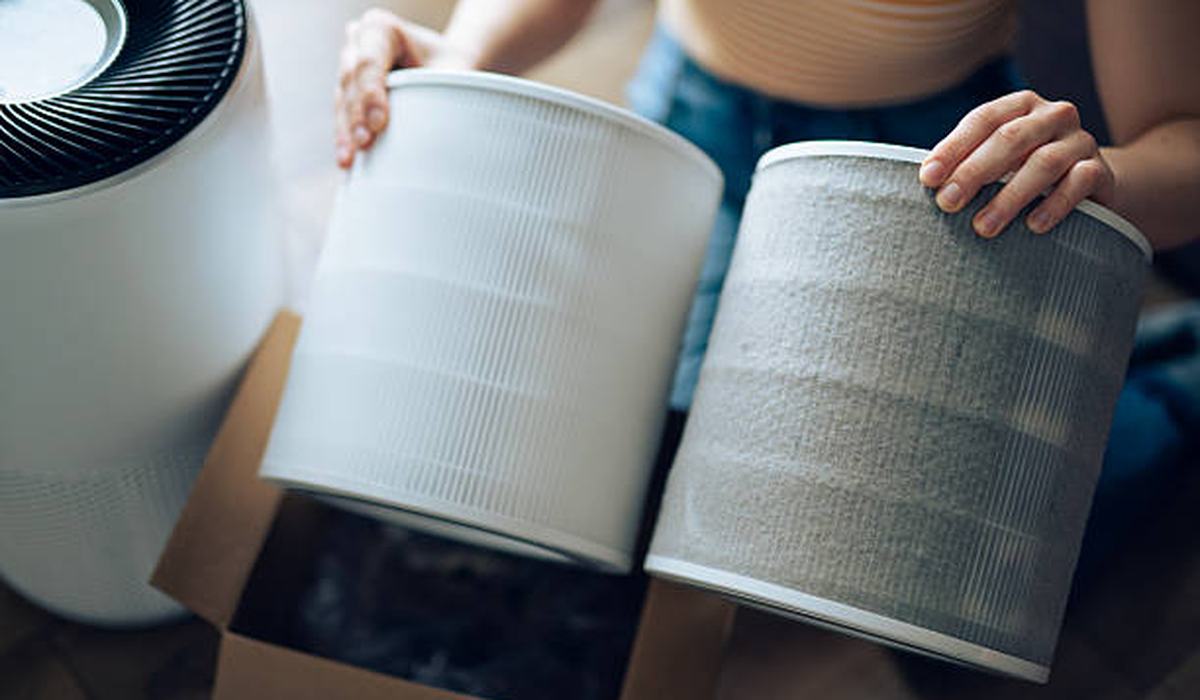
Genuine HEPA + carbon cartridge — buy both together
Buy the pair as a set where possible. Replacing HEPA while leaving saturated carbon is the most common waste of money on a purifier.
Check Price on Amazon →
A washable carbon layer — best value for odour control
If you cook a lot in a small flat, a washable carbon honeycomb layer outlasts thin carbon sheets many times over before it needs replacing.
Check Price on Amazon →HEPA handles particles, carbon handles gases, and they fail in different ways. If you want clean air and no smells, you need both — and you need to replace the carbon on its own schedule, because it will quietly stop working long before the HEPA is done.
Frequently asked questions
Combined filters and what to buy
| Filter arrangement | Particle removal | Odour removal | Notes |
|---|---|---|---|
| Pre-filter + HEPA | Excellent | None | Add carbon separately |
| Pre-filter + HEPA + carbon | Excellent | Good | Best all-round |
| HEPA only | Excellent | None | Odours will linger |
| Carbon only | Poor | Good | Not an air purifier |
| Combined HEPA/carbon cartridge | Good | Fair | Convenient, shorter life |
The mistake people make is buying a purifier for a problem it cannot solve. A HEPA-only unit will remove smoke particles beautifully and leave the smell entirely intact, because odour is a gas-phase problem and gases pass straight through a particle filter. If cooking or tobacco smells are the issue, the carbon layer is the part doing the work.
For particles — pollen, dust, smoke, pet dander — buy a true HEPA filter. For odours and VOCs, buy a heavy activated carbon layer. For both, buy a unit with a washable pre-filter, a true HEPA stage and a substantial carbon stage, and replace the carbon more often than the HEPA.