A heat gun does jobs no other tool can: softening the adhesive behind a control panel, shrinking heat-shrink tubing onto a splice, loosening a stuck hose, or thawing a frozen drain line. In appliance repair it is a specialist tool, but when you need it, nothing else works.
The critical feature is variable temperature control — a single-temperature gun will scorch plastic and melt what you are trying to save.
- Must-have: variable temperature control, not just high/low.
- Best overall: a variable-temp gun with 200–1,100°F range and multiple nozzles.
- Best budget: a two-speed gun with a basic temp range.
- Best for precision: a gun with a digital display and a narrow nozzle.
- Safety: never leave a heat gun unattended.
The specs that matter
| Spec | Target | Why |
|---|---|---|
| Temperature control | Variable, 200–1,100°F | Different jobs need different heat |
| Airflow control | 2+ speeds | Gentle for plastic, strong for thawing |
| Nozzles | Multiple included | Concentrate or spread the heat |
| Cool-down | Yes | Safe storage after use |
| Wattage | 1,500W+ | Enough heat for real work |
| Stand | Built-in | Hands-free operation |
A single-temperature heat gun runs at 1,000°F or more, which melts most appliance plastics instantly. You need to dial down to 200–400°F for plastic work and up for thawing.
The 4 best picks
| Model | Temp range | Speeds | Nozzles | Approx price |
|---|---|---|---|---|
| DEWALT D26960 | 150–1,100°F | Variable | 4 | ~$70 |
| Wagner HT1000 | — | 2 | 3 | ~$40 |
| Milwaukee 8975-6 | — | 2 | 3 | ~$60 |
| SEEKONE 1800W | 122–1,112°F | Variable | 4 | ~$35 |
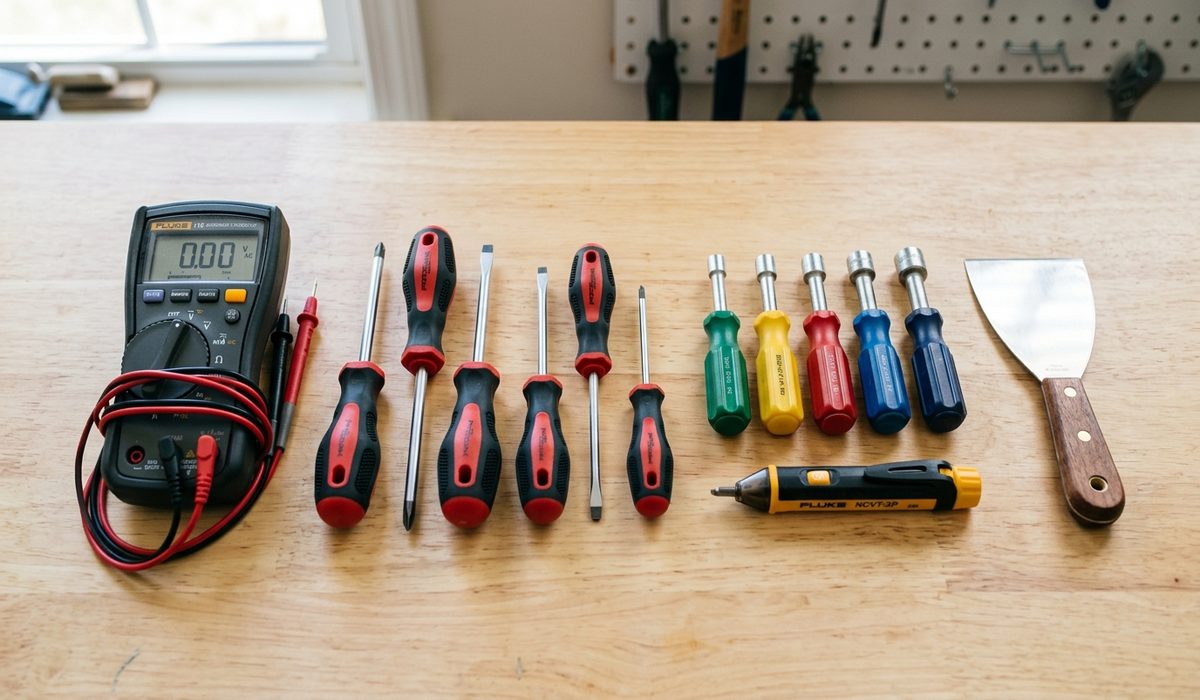
DEWALT D26960 — best overall
Full variable temperature control with an LCD readout, four nozzles and a built-in stand. The gun that handles every appliance job without scorching.
Check Price on Amazon →SEEKONE 1800W — best budget
Variable temperature and four nozzles for under $40. A great value for occasional appliance work.
Check Price on Amazon →Wagner HT1000 — best simple option
A simple two-speed gun for basic jobs like shrink tubing and loosening adhesive. Not for precision plastic work.
Check Price on Amazon →Common appliance uses
- Shrinking heat-shrink tubing onto a wire splice.
- Softening adhesive behind a control panel or nameplate.
- Loosening stuck hoses on a washer or dishwasher.
- Thawing a frozen drain line in a fridge or AC.
- Removing a stubborn label or sticker residue.
- Drying a damp connector before reassembly.
Heat gun safety
- Never leave it unattended while running.
- Keep it away from fuel lines and gas fittings.
- Use the lowest effective temperature — start low and increase.
- Keep a fire extinguisher nearby.
- Let it cool on its stand before storing.
- Do not point it at a capacitor or battery — heat can cause them to fail.
For appliance repair, buy a heat gun with variable temperature control and multiple nozzles. A single-temperature gun will scorch plastic. The DEWALT D26960 is the best all-rounder; the SEEKONE 1800W is the best budget pick.
Frequently asked questions
Technique: moving air, not a hot spot
| Habit | Why it matters |
|---|---|
| Keep the gun moving | Prevents a hot spot and a melted part |
| Start at the lowest useful setting | You can always add heat, never remove it |
| Hold 10–15 cm away | Distance is your main temperature control |
| Test on scrap first | Learn the material's softening point |
| Use the cool-down cycle | Doubles the element's life |
| Never point at one spot | Plastic fails without warning |
The nozzle distance is the control most people ignore. A heat gun held 5 cm away delivers far more energy to the surface than the same gun at 15 cm, regardless of the dial setting. That means you can do more damage on a low setting at close range than on a high setting at a distance. Start far away, move constantly, and bring the nozzle closer only if the material is not responding.
Practise on an offcut of the same plastic before touching the appliance. Appliance panels are usually a single moulding with no spare, so the first time you learn what a material does when warmed should not be on the only one you own.
Low setting, far away, always moving. If nothing is happening after thirty seconds, move closer — do not raise the temperature. Distance is reversible; a melted panel is not.
Where a heat gun actually helps
Heat does three useful jobs on appliance work: loosening adhesives and seals without tearing them, softening brittle plastic so clips release instead of snapping, and drying moisture from connectors and insulation before reassembly.
| Job | Technique | Precaution |
|---|---|---|
| Freeing door seals | Warm evenly, pull gently | Do not scorch the gasket |
| Releasing plastic clips | Short bursts at low setting | Keep 4+ inches away |
| Drying wet connectors | Warm air, low setting | Never near fuel or refrigerant |
| Shrinking heat-shrink | Small nozzle, brief pass | Protect nearby wiring |
| Softening sealant | Warm, then scrape | Ventilate the area |
The failure mode is always the same: too much heat, too close, for too long. Plastic that looks unchanged will deform abruptly, and a scorched gasket or a melted connector turns a simple job into a parts order.
Always start on the lowest setting and increase slowly, keeping the nozzle moving. A heat gun that can hold a steady low temperature is more useful than one with a higher maximum, because almost every appliance task needs gentle, controlled warmth rather than raw output.