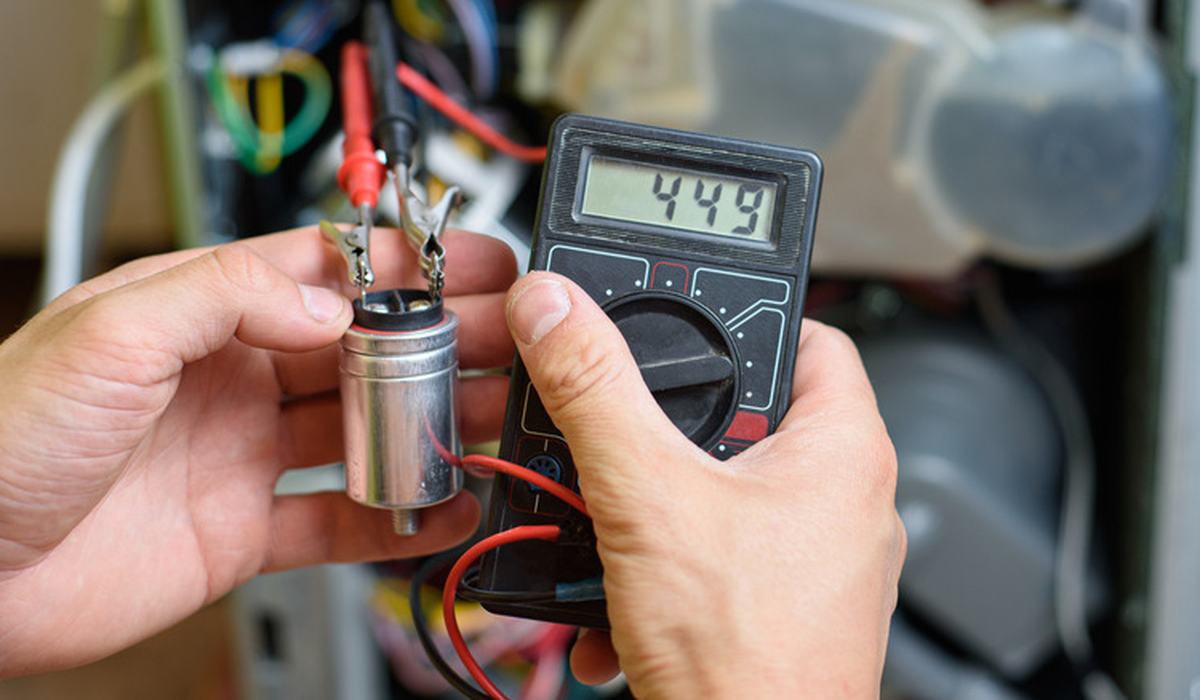
A multimeter is the one diagnostic tool every appliance repair needs. But you do not need an expensive professional meter. Appliance work needs three functions: continuity, AC/DC voltage, and capacitance for testing start capacitors. A meter with those three, plus a CAT III safety rating, covers everything.
This guide covers the features that matter and three meters worth buying.
- Must-have functions: continuity, AC/DC voltage, resistance, capacitance.
- Safety rating: CAT III 600V minimum.
- Best overall: an auto-ranging meter with a capacitance range.
- Best budget: a basic auto-ranging meter under $40.
- Nice to have: a non-contact voltage detector built in.
Features that matter
| Feature | Why it matters |
|---|---|
| Continuity | Finds blown fuses and broken wires |
| AC voltage | Confirms power is reaching a component |
| DC voltage | Tests control boards |
| Resistance | Checks components against spec |
| Capacitance | Tests start and run capacitors |
| CAT III 600V | Safety rating for mains work |
| Auto-ranging | Faster, fewer mistakes |
Start capacitors are one of the most common appliance failures, and you cannot test them without a capacitance range. A meter without it will leave you guessing on fridge and motor faults.
The 3 best picks
| Model | Functions | Safety | Approx price |
|---|---|---|---|
| Klein MM325 | Continuity, V, R, C | CAT III 600V | ~$50 |
| Fluke 117 | Full auto-range | CAT III 600V | ~$180 |
| AstroAI AM33D | Continuity, V, R | CAT II 600V | ~$25 |
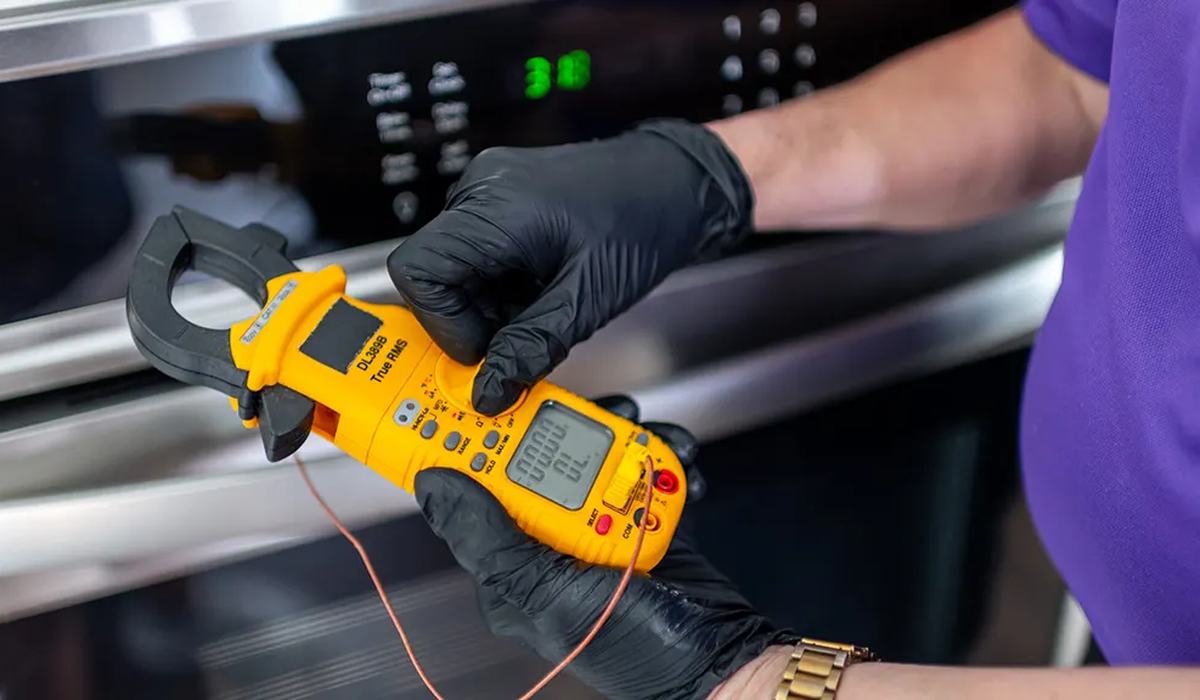
Klein MM325 — best overall
Auto-ranging with continuity, voltage, resistance and capacitance, plus a CAT III safety rating. Everything appliance repair needs.
Check Price on Amazon →Fluke 117 — best premium
The meter professionals trust. If you repair appliances regularly, the accuracy and reliability are worth the price.
Check Price on Amazon →AstroAI AM33D — best budget
A basic meter for continuity, voltage and resistance under $30. It lacks capacitance, so add a separate capacitor tester if you need one.
Check Price on Amazon →Using it on appliances
- Continuity for fuses, switches and wires — unplugged.
- AC voltage to confirm power reaches a component — live, with care.
- Resistance to check heating elements and motors — unplugged.
- Capacitance to test start and run capacitors — unplugged and discharged.
- DC voltage for control boards and sensors.
- Always discharge capacitors before testing them.
Safety
- Use a CAT III 600V meter for mains work.
- Check the leads for cracks before each use.
- Never test resistance on a live circuit.
- Discharge capacitors before touching them.
- Keep one hand behind your back when probing live voltage.
- Replace the battery when the low-battery icon appears.
For appliance repair, buy an auto-ranging multimeter with continuity, voltage, resistance and capacitance, rated CAT III 600V. The Klein MM325 is the best all-rounder; the AstroAI AM33D is a fine budget start if you add a capacitor tester.
Frequently asked questions
Five meter mistakes that give wrong readings
| Mistake | What happens | Avoid by |
|---|---|---|
| Measuring resistance on a live circuit | Meaningless number; possible meter damage | Unplug and discharge first |
| Wrong dial range | Over-range 'OL' or a damaged meter | Use auto-ranging |
| Blunt probe tips | Poor contact; intermittent readings | Fine-tip probes |
| Flat battery | Sagging readings on ohms | Replace yearly |
| Not zeroing leads | Readings offset by lead resistance | Touch probes, note the value |
Most 'the multimeter says the part is fine but the appliance is broken' cases trace to one of these five. The most common is measuring resistance with the circuit still energised: the meter no longer sees the component, it sees the supply, and the number it produces is meaningless in both directions. The second most common is a flat battery, which makes an ohms range read high and sends you chasing a fault that does not exist.
Touch the two probe tips together and note the reading — typically 0.1–0.5 ohm. Subtract that from any low-ohm reading you take, or you will condemn a healthy relay as open when the meter is simply reporting its own leads.