A dehumidifier is the least glamorous appliance on this site and, in a humid apartment, the one that changes your life most. It stops the condensation on window glass, the musty smell in the wardrobe corner, and the mould that appears behind furniture every winter.
The apartment problem is that full-size dehumidifiers are the size of a suitcase and sound like one too. Here are the units that actually work in a small rented space.
- Best overall: a 20–22 pint compressor unit — right size for a one-bedroom at a sane price.
- Best for a bedroom: a low-noise unit under 40 dB so you can sleep with it on.
- Best for a bathroom or closet: a small thermoelectric unit under 2 pints, which is enough for a sealed 60 sq ft space.
- Best for a cold room: a desiccant unit, which keeps working below 15°C where compressor units stall.
On this page
Why apartments need dehumidifiers more than houses
Two structural reasons make apartments more prone to damp:
- Less external wall area to lose moisture through. A house has four exposed facades and a roof. An apartment typically has one or two, sometimes none.
- Bathrooms and kitchens with weak extraction. Shared riser ventilation is slow. Every shower adds moisture that stays in the flat.
- Washing drying indoors. In a small flat, drying a load of laundry indoors can add several litres of water to the air. This is the single biggest humidity source in many apartments.
The consequence is a winter cycle: air hits a cold window or a cold exterior-wall corner, condenses, and feeds mould. Heating alone does not fix it — it lowers relative humidity but does not remove the water.
How to size one correctly
Pint capacity (the US measure) is the amount of water removed per 24 hours at a rated temperature. Match it to the room, not to the whole apartment, unless you intend to move the unit around.
| Room | Recommended capacity | Realistic daily water | Notes |
|---|---|---|---|
| Bathroom up to 80 sq ft | 0.5–2 pints (thermoelectric) | 250–500 ml | Enough for shower damp; empty daily |
| Bedroom 120–180 sq ft | 10–20 pints (compressor) | 1–3 litres | Where most people actually need one |
| Studio 300–400 sq ft | 20–30 pints | 2–5 litres | One unit, doors open, will cover it |
| Damp basement bedroom | 30–50 pints | 5–10 litres | Consider a pump model so you are not emptying constantly |
Compressor dehumidifiers lose efficiency below about 15°C and can ice up. If you are trying to dry an unheated spare room in winter, choose a desiccant unit — it uses a rotating wheel instead of a cold coil and keeps working down to near freezing.
The 5 best picks for a small apartment
| Model | Best for | Capacity | Noise | Price | Verdict |
|---|---|---|---|---|---|
| Vremi / hOmeLabs 20-pint class | Most one-bedroom apartments | 20 pints | ~48 dB | ~$170 | Best value |
| Pro Breeze Mini | Bathroom, closet, small bedroom | 0.5–1 pint | ~38 dB | ~$60 | Best small space |
| Frigidaire 22-pint | Damp bedrooms, quieter running | 22 pints | ~44 dB | ~$210 | Best low noise |
| SEAVON 35oz thermoelectric | Closets and cupboards | 0.6 pint | ~35 dB | ~$50 | Cheapest |
| Ivation desiccant | Cold rooms and garages | 15 pints | ~50 dB | ~$250 | Best for cold |
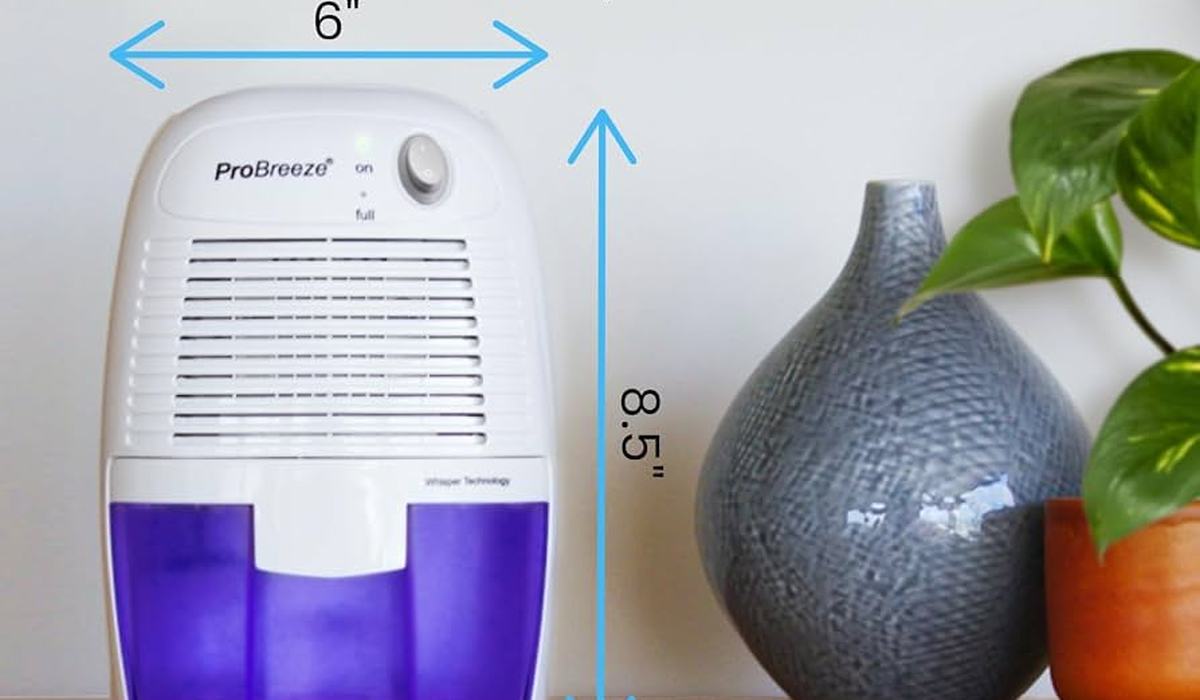
Pro Breeze Mini — best for a bathroom or small bedroom
Small enough to sit on a shelf, quiet enough to leave on, and enough to stop shower damp from spreading into the bedroom. Empty the tank daily.
Check Price on Amazon →
20-pint compressor class — best for a whole apartment
For a damp one-bedroom this is the size that actually moves the needle. Move it between rooms or leave it central with doors open.
Check Price on Amazon →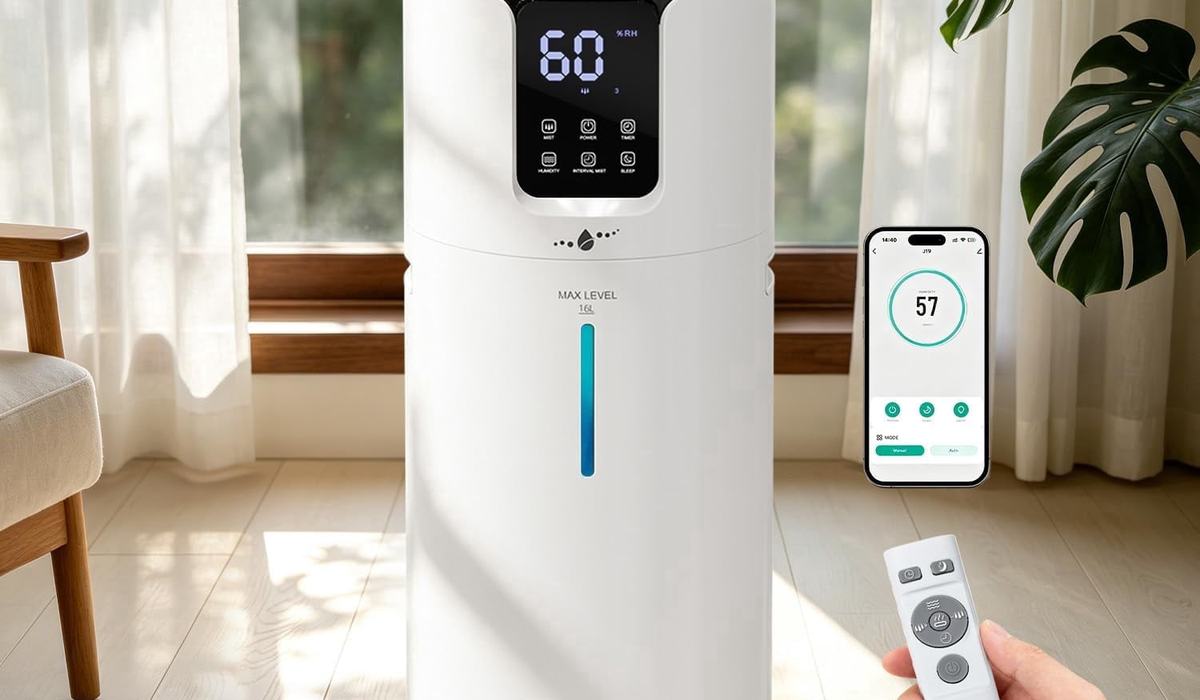
Digital-hygrostat units — set 45% and forget it
A built-in hygrostat means the unit switches itself off at your target humidity. That saves electricity and stops you over-drying the room.
Check Price on Amazon →Running cost and noise
A compressor dehumidifier typically draws 200–350 watts while running. If it runs six hours a day at 300 W, that is about 1.8 kWh — roughly 29 cents a day at $0.16/kWh, or under $9 a month. Compare that to re-plastering a mouldy corner.
- Noise: expect 44–50 dB from compressor units, 35–40 dB from thermoelectric. If it is for a bedroom, this is the number that matters.
- Position: 15–20 cm from walls, doors to the rest of the apartment open if you are treating the whole flat.
- Close the windows while it runs, or you are dehumidifying the street.
- Empty the tank daily — a full tank switches the unit off, and you will not notice.
Apartment-specific tips
- Dry laundry with the unit running. A clothes airer plus a dehumidifier dries a load in a day without fogging the windows.
- Target 45%, not 30%. Over-drying makes the flat feel cold and dry and wastes power.
- Run it during and after showers, not permanently — a 20-minute session in the bathroom after each shower prevents most mould.
- Squeegee the shower walls. It removes the water before it ever becomes vapour. Costs nothing.
- Check behind furniture. Mould forms where air does not move. Pull wardrobes 5 cm off the wall.
For a damp one-bedroom, a 20-pint compressor unit with a built-in hygrostat set to 45% is the sweet spot. For a bathroom or closet, a small thermoelectric unit is enough. For a cold room, go desiccant.
Frequently asked questions
Sizing a dehumidifier for a small flat
| Room size | Pints per day | Noise expectation |
|---|---|---|
| Up to 300 sq ft | 20–22 pints | Quiet enough for a bedroom |
| 300–500 sq ft | 22–30 pints | Audible hum |
| 500–800 sq ft | 30–45 pints | Noticeable |
| Whole flat, 2 rooms | 45–50 pints | Run when out |
| Damp basement | 50–70 pints | Loud; not for living space |
Pint rating is quoted at a standard test condition, and real rooms extract less. A unit rated at 22 pints will pull roughly 12–15 pints from a cool, humid apartment in a day. For a single damp bedroom, that is comfortably enough, which is why the small compressors dominate the apartment market.
Compressor dehumidifiers lose efficiency sharply below about 65°F, so they under-perform in a cold flat. Desiccant units work at low temperatures but use more power. If your damp problem is worst in winter, choose desiccant.