A persistent fridge smell is one of the most frustrating appliance problems, because the obvious fix — throwing out old food — rarely solves it. The real source is usually hidden: in the drain pan, behind the crisper drawers, or in a water filter that has gone bad.
This guide walks through the hidden sources in order, then the cleaning method that actually removes the smell rather than masking it.
- Most common hidden source: the defrost drain pan under the fridge, which collects stagnant water.
- Second: a spent water filter, which can grow bacteria and smell like sulphur.
- Third: spilled liquid that ran under the crisper drawers and dried.
- Fast fix: baking soda or activated charcoal absorbs odour while you find the source.
- Do not just mask it with a scented box — find and remove the source.
The hidden sources
| Source | Smell | How to check |
|---|---|---|
| Defrost drain pan | Musty, sour | Pull the fridge out, look underneath |
| Water filter | Sulphur, rotten eggs | Replace it and see if the smell goes |
| Under crisper drawers | Rotten, sour | Lift the drawers out |
| Door gasket folds | Mildew | Wipe inside the gasket folds |
| Ice maker / water line | Stale, musty | Run the dispenser, check the line |
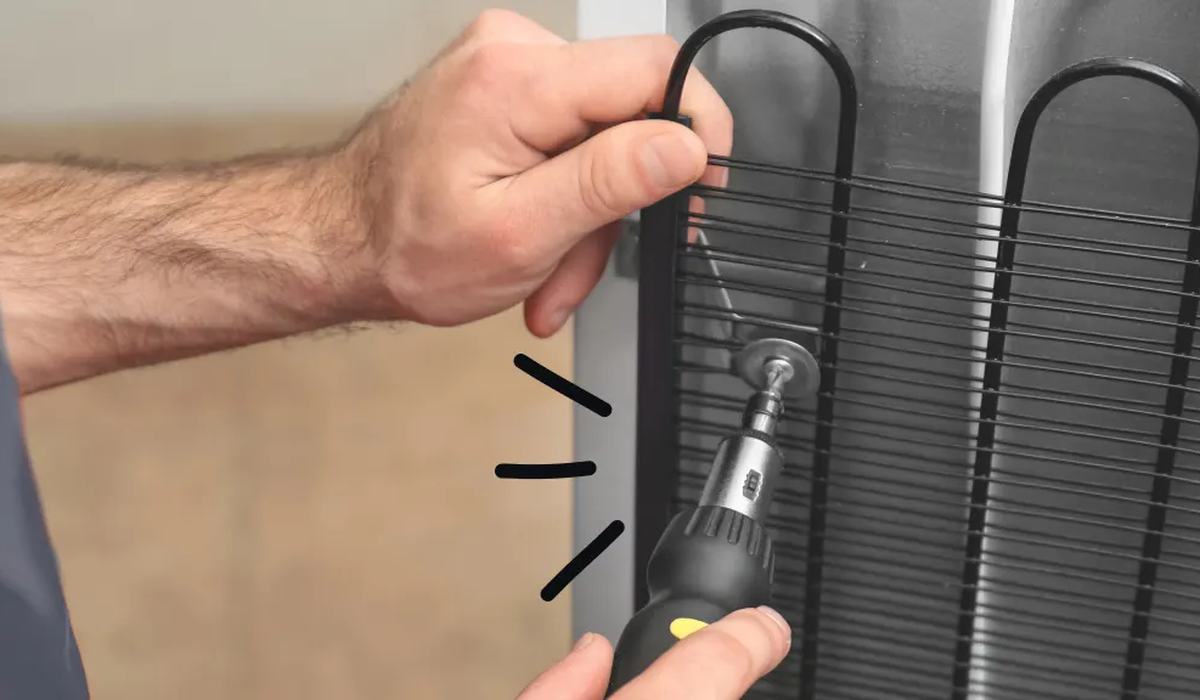
| Condenser coils | Dusty, burning | Vacuum the coils at the back |
The drain pan is the number-one culprit and the one most people never check. Every fridge produces condensation that drains to a pan underneath, where it evaporates. If the pan is dirty or the drain is slow, that water stagnates and the whole fridge smells.
How to find the source
Work from the outside in. First, pull the fridge away from the wall and look at the drain pan underneath — it is usually a shallow tray at the bottom rear. If it holds standing water or has a film of slime, you have found the source.
- Empty the fridge completely and inspect every shelf and drawer.
- Lift out the crisper drawers and look at the floor beneath them — spills pool there.
- Check the door gaskets by peeling back the folds; mildew hides in the creases.
- Sniff the water filter if you have one, and replace it if it smells.
- Check the ice maker and the water line for stale water.
- Vacuum the condenser coils at the back or bottom — dust there can smell scorched.
How to clean it properly
Once you have found the source, clean it thoroughly. Masking the smell with a scented box will not work if the source is still there.
- Unplug the fridge and remove all food.
- Wash the interior with a solution of two tablespoons of baking soda in a quart of warm water. Do not use bleach inside a fridge.
- Clean the drain pan with hot soapy water, then rinse and dry it.
- Flush the defrost drain with warm water to clear any blockage.
- Wipe the gaskets with a mild vinegar solution and dry them.
- Replace the water filter if it is more than six months old.
- Leave the doors open for a few hours to air out, then place a fresh box of baking soda inside.
Bleach fumes can be absorbed by food and plastic, and can damage seals. Baking soda or a mild vinegar solution cleans just as well and leaves no residue.
Preventing the smell
- Keep a box of baking soda in the fridge and replace it every three months.
- Cover strong-smelling food. Onions, fish and leftovers should be in sealed containers.
- Clean the drain pan twice a year. It is the source most people forget.
- Replace the water filter every six months. A spent filter is a bacterial breeding ground.
- Wipe spills immediately, especially under the drawers where they pool.
- Vacuum the condenser coils every six months to prevent dust odour.
A fridge smell is almost always hidden — the drain pan, a spent water filter, or a spill under the drawers. Find the source, clean it with baking soda, and keep a fresh box of baking soda inside. Masking the smell never works.
Frequently asked questions
Air filters
A fresh air filter removes odours the fridge cannot clear.