Apartment life often means no carpet shampooer: nowhere to store one, no budget for a rental, or a landlord who does not want the floor wet. That does not mean you are stuck with a grubby carpet. There are several methods that genuinely clean, using tools you already own.
- Baking soda + vacuum — dry deodorising, safe on all carpet, zero risk.
- Vinegar and water spray + brush — the best all-round manual clean.
- Dish soap spot treatment — for individual stains.
- Steam iron + towel — surprisingly effective on set-in stains.
- Rubbing alcohol spray — for ink, grease and some synthetic stains.
- Enzyme cleaner — the only thing that removes pet odour properly.
On this page
The mistake that ruins carpets: over-wetting
The single most common way people damage a carpet while cleaning it is using too much water. Carpet has a foam or rubber backing and an underlay beneath it. Water that soaks past the fibres sits there, and in a warm apartment it grows mould within days — producing a smell you will never fully remove.
- Rule: damp, never soaked. You should be able to walk on it in an hour.
- Blot, do not scrub. Scrubbing pushes moisture and dirt deeper into the backing.
- Always work from the outside of a stain inward so you do not spread it.
- Dry with airflow, not heat alone. A fan plus an open window beats a hairdryer.
- Never saturate a seam or an edge — the backing fails there first.
1. Baking soda dry clean — the safest option
This does not remove heavy soiling, but it is excellent for odour, for light surface grime, and as a regular maintenance step. It is safe on every carpet type including wool and delicate synthetics.
- Sprinkle baking soda generously over the carpet, working it in lightly with a soft brush.
- Leave 30–60 minutes — longer for odour, ideally overnight for pet smells.
- Vacuum thoroughly with slow, overlapping passes.
- For a stronger deodorising mix, add a few drops of essential oil to the soda and let it dry before spreading.
- Repeat weekly during high-odour periods.
2. Vinegar and water — the best all-round manual clean
A dilute white vinegar solution lifts general grime, neutralises odour and leaves no residue when it dries. The smell disappears as it evaporates.
| Mix | Use for |
|---|---|
| 1 part white vinegar : 3 parts warm water | General cleaning, whole-room refresh |
| 1 part : 1 part | Heavier soiling, high-traffic paths |
| Straight vinegar | Spot treatment for set-in odour |
- Test in a hidden corner — especially on wool or a natural fibre, and always on a coloured carpet.
- Spray lightly so the surface is damp, not wet through.
- Work in sections, about a square metre at a time.
- Agitate with a soft brush in one direction, then blot with a clean white towel.
- Rinse by blotting with a cloth dampened in plain water, then dry with a fan.
Do not combine vinegar with baking soda on the carpet expecting a reaction — you get fizzing that pushes dirt deeper and leaves residue. Use them in separate steps or separate sessions.
3. Dish soap spot method
For individual stains, the classic method still works best. One drop of clear dish soap in two cups of warm water. Clear, not coloured — coloured soap can dye the carpet.
- Blot the stain with a white cloth first, removing as much liquid as possible.
- Apply the solution to the cloth, not directly to the carpet, then press onto the stain.
- Work from the outside in to prevent spreading the ring.
- Rinse with clean water on a fresh cloth, blotting repeatedly.
- Dry with a towel underfoot and a fan on the area.
4. Steam iron and towel
This is the method most people have never heard of and it works remarkably well on set-in stains, especially wax, and on greasy marks.
- Place a clean white towel over the stain.
- Set an iron to steam (not maximum heat) and press the towel for 10–15 seconds.
- Lift the towel and check whether the stain has transferred to it.
- Repeat with a clean section of towel each time, until no more transfers.
- Never hold the iron in one place — heat plus moisture plus synthetic fibre equals melted carpet.
5. Rubbing alcohol for grease and ink
Isopropyl alcohol cuts grease and lifts some inks and cosmetics that soap cannot touch. Apply to a cloth, never directly to the carpet.
- Grease and oil: alcohol on a cloth, press, blot, repeat with a clean area each time.
- Ink: dab with alcohol on a cloth, moving outward from the edge of the mark.
- Candle wax: freeze it with an ice cube first, snap it off, then use the iron-and-towel method for the residue.
- Always test first — alcohol can lift some dyes, particularly on cheaper synthetic carpet.
6. Enzyme cleaner for pet odour
If the problem is smell, nothing else works. Ordinary cleaning removes the visible mark but leaves the uric acid crystals in the backing, and your pet can still smell them — which is why they return to the same spot.
- Use a dedicated enzyme cleaner formulated for pet waste; a general cleaner will not break down uric acid.
- Saturate the area and let it dwell for the time the bottle states — usually 10–15 minutes.
- Blot, do not scrub, then let it air-dry. The enzymes keep working as it dries.
- Repeat if the smell returns on a humid day, and check with your nose at floor level.
- For deep contamination, the underlay may need replacing — no surface method reaches that.
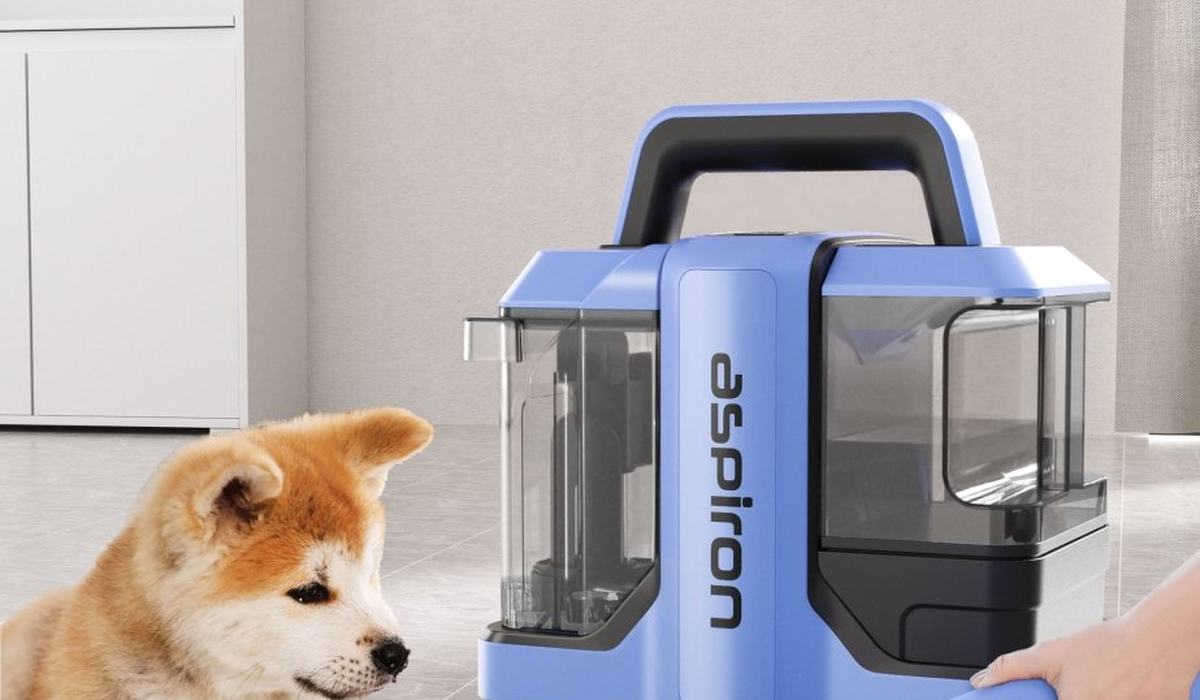
Portable carpet cleaner — if you want machine results without the bulk
A portable spot cleaner takes up shelf space rather than floor space and delivers real extraction. It is the compromise most apartment dwellers want.
Check Price on Amazon →
Air movement for drying — the step everyone skips
Whatever method you use, the carpet is not clean until it is dry. A fan plus an open window beats every other drying method and prevents the mould that follows a wet carpet.
Check Price on Amazon →Baking soda for odour, vinegar-and-water for general cleaning, dish soap for spots, an iron and towel for set-in marks, alcohol for grease, and enzyme cleaner for anything the pet did. Damp — never soaked, and always dry it with airflow.